Amstel Quartet

Dutch Saxophone Ensemble

"The men of the Amstel Quartet have no fear ... We can now say that the saxophone quartet is ‘the string quartet of the second half of the twentieth century.’" wrote the press about the Amstel Quartet.
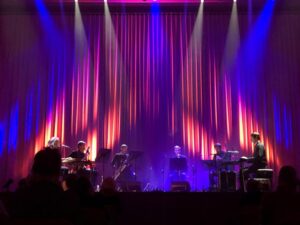
The repertoire of the Amstel Quartet is original, its performances personal. The Amstel Quartet has the technical confidence to tackle the most difficult piece from Iannis Xenakis and the versatility to collaborate with artists from other disciplines – such as dance, musical theatre, mime and cinema.

Latest News

Amstel Friends pay less!

August 27, 2010

Friends of the Amstel Quartet receive reduction on tickets for the Gaudeamus Music Week concerts on September 6, 8 en 12 in the Muziekgebouw aan 't IJ. You'll pay €10,50 per ticket (in stead of €13,00)

Call the Muziekgebouw on 020-788 20 00, and mention you're a Amstel Quartet Friend.

The Amstel Quartet plays on Wednesday September 8 in a concert with the Luxembourg ensemble United Instruments of Lucilin (http://www.lucilin.lu/). time: 20:15 place: Muziekgebouw aan 't IJ

Review Amstel Peijl album

August 16, 2010

PAUL WAGNER reviewed the Amstel Peijl album in the Juli-August issue of Saxophone Journal


AMSTEL PEIJL
Amstel Quartet
AR006 Amstel Records
www.amstelquartet.nl
http://www.youtube.com/user/amstelquartet

The Amstel Quartet consists of Remco Jak on
soprano; Olivier Sliepen on alto; Bas Apswoude on tenor, and
Ties Mellema on baritone. The Amstel Quartet has been performing
for over ten years. The four saxophonists met while touring with
Dutch National Youth Orchestra and in 1997 they decided to form
a quartet where they could test the boundaries of the conventional
saxophone repertoire of the time.
Their name came from the fact that the Amstel River is the
historical birthplace of the city of Amsterdam and that is an ever
changing waterscape, reflecting the changes in life along its shore.
The Amstel became the obvious name for the quartet although
grounded in the traditions of chamber music it too, was ready to
accommodate the changes that time present s much like the Amstel river.

Thus the Amstel Saxophone began its climb to success.
After a few years their reputation had grown so much that the
name changed to simply to the Amstel Quartet. They have earned
many prizes and awards with the latest coming in the form of the
2006 Concert Artists Guild Management and Audience Awards
at Carnegie Hall in New York city. In 2005 the Quartet won the
International Chamber Music Competition in Illzach. France and
placed second for the Gaudeamus Interpreter's prize. In 2004 they
won the Chamber Music in Yellow Springs Competition in the
United States. That same year brought the quartet the Uitmarkt
Audience Award and the Kersjes van de Groenekan awards in the
Netherlands. The Amstel Quartet has also won the Dutch Almere
Prize for Chamber Music and was a prize winner at the Gustav
Bumcke Competition ensembles in Dortmund, Germany.
Back in 1684 The Dutch began monitoring water levels the Stads
Peijl or Amsterdam Peijl which became the bench mark for water
levels. In the same spirit this CD is tit led Amstel Peijl which has
become the bench mark for the Amstel Quartet. They have selected
three compositions for this standard.
The Opening selection on this CD, Gabriel Fauré Pelléas et
Mélisande Suite, Opus 80, was arranged specifically for them by
Pianist Wijnand van Klaveren for saxophone quartet and piano.
The sound of the quartet is quite excellent and its blending with
the piano is perfect. The quintet lets the music swirl as it lives it's
way to the listener's ears. The first movement creates a wonder-
fully big sound, that at times feels like a full orchestra. These
five artists paint a wonderful aural picture for our ears and our
imagination to thoroughly enjoy. The third movement, Sicilienne,
is absolutely gorgeous. The heartache feel of Le Mort de Mélisande
(the forth movement) is portrayed beautifully. Much applause, with
a standing ovation is deserved by all involved, with an extra round
for the arranger.
The next selection is the Alexander Glazunov Saxophone Quartet,
Opus109. This a great piece of music inspired by Glazunov's hear-
ing the Quatuor de Saxophones de la Garde Républicaine (which
was established 1928). He wrote the piece in 1932 and it is as fresh
today as when he wrote it. On the Glazunov, the Amstel Quartet
has an intuitive sense weaving the melodic lines of the music in
around each other with great energy and ease. The articulations
sound effortless. This is a delightful rendition of a true classic for
the saxophone quartet.
The grand finale for this CD is Saxophone Quartet, 1995, by Phil-
lip Glass. It opens with three saxophones creating an undulating
background for the soprano to bring its theme to the fore. Then we
have a sound texture and a melody ascending through the back-
ground leading us into a more active area. The second movement
opens with somewhat jazz feel with the baritone saxophone setting
the pace while the other saxophones provide rhythmic chord fills.
The third movement begins with a somber feel, and then the alto
saxophone enters with a working melodic line that is picked up by
the group bringing the piece to a concerted finish. The final move-
ment is a real flag waver full of exciting blends of melodies. Simply
put, Saxophone Quartet, 1995, is an excellent performance by an
equally exciting saxophone quartet.
As stated in the CD jacket liner notes, "After many explorations
in the area of modern and most modern music, the Amstel Quartet
now sets its own standard with these three pieces which goes back
to the roots of the saxophone quartet. That is why this album
represents the current state of affairs for the Amstel Quartet. This
is how a saxophone quartet should sound like according to the
members of the Amstel Quartet."
As you listen to this CD you will agree that the Amstel Quartet definitely sets a high benchmark of excellence for saxophone quartet performance.

§
Saxophone Journal (Juli-August 2010)
Paul Wagner

Holiday

July 28, 2010

see you in september!

Jay Leno recommends Amstel Tracks

May 9, 2010

For those of you who need some help choosing which of the five marvelous Amstel Quartet albums to buy:

Jay recommends Amstel Tracks!

During their april 2010 US tour, the Amstel Quartet met Jay Leno at The Comedy and Magic Club in Hermosa Beach just before his show.


review in FanfareMag

April 14, 2010

Read the full article here

.. . . . .. . From just looking at it, I wasn’t sure about the commercial viability for the Amstel Quartet’s CD Amstel Peijl either, but after the first few minutes of what would become more than a dozen listens, I knew I loved it.

My intuitive notion of a saxophone quartet is that of a rather modern invention, perhaps even a recent fad. The saxophone is a fairly recent instrument, of course, but at 160 years it is young only when compared to instruments like the violin or the recorder. And while it is not generally associated with classical music—Berlioz’s efforts notwithstanding—it has been around long enough for Claude Debussy and Vincent d’Indy to write for it. Moreover, the idea of gathering four saxophones (usually consisting of B soprano and tenor saxophones and E alto and baritone saxophones) for a quartet goes back pretty far too. In French-speaking countries the Belgian invention became a military band staple; elsewhere it was jazz that adopted and introduced the instrument.

Alexander Glazunov heard the saxophone quartet of the French Republican Guards (insert coy French-bashing joke about not winning military battles with saxophones tied around soldiers’ necks here) and composed his op. 109 for it. The repertoire hasn’t seen many additions—certainly not of that quality—since, so to this day, that’s what saxophone quartets are busy playing when they are not occupied transcribing the Goldberg Variations . The other piece included on the Amstel Quartet’s CD originally written for saxophone quartet is Philip Glass’s quartet as culled from his concerto for the same setup. Four movements of inspired same-ishness in smoothly polished perfection—but not as satisfying as the arrangement of Fauré’s Pelléas et Mélisande Suite these four Dutch players commissioned from their pianist-buddy Wijnand van Klaveren, who naturally wrote himself into the piece to great effect. The title of the disc, Amstel Peijl, refers to the traditional Dutch water marker that has become an international standard—presumably as a signal that this is where the quartet sees itself and what they wish to be measured against in the future. If you’re Dutch, I assume with water levels lower is better … and the merits of this stocktaking are such that it will be very difficult for any other group to get below that. It’s a superbly entertaining group and the disc should appeal to any music lover and by no means only those who know that they are interested in the saxophone.

Written by Jens F. Laurson